
WHAT WE OFFER
Services & Conditions Treated
Obstetric Care
Dr Peters offers comprehensive obstetric care tailored to support you through every stage of your pregnancy journey. From preconception planning to postnatal care, her approach combines clinical excellence with personalised attention – ensuring you feel informed, supported, and confident every step of the way.
- Preconception counselling and care
- Comprehensive antenatal care
- Management of medical conditions in pregnancy
- Twin pregnancies
- Vaginal birth
- Caesarean section
- Vaginal birth after caesarean section (VBAC) – case dependent
- Postnatal care
- Early pregnancy complications (including miscarriage and ectopic pregnancy)
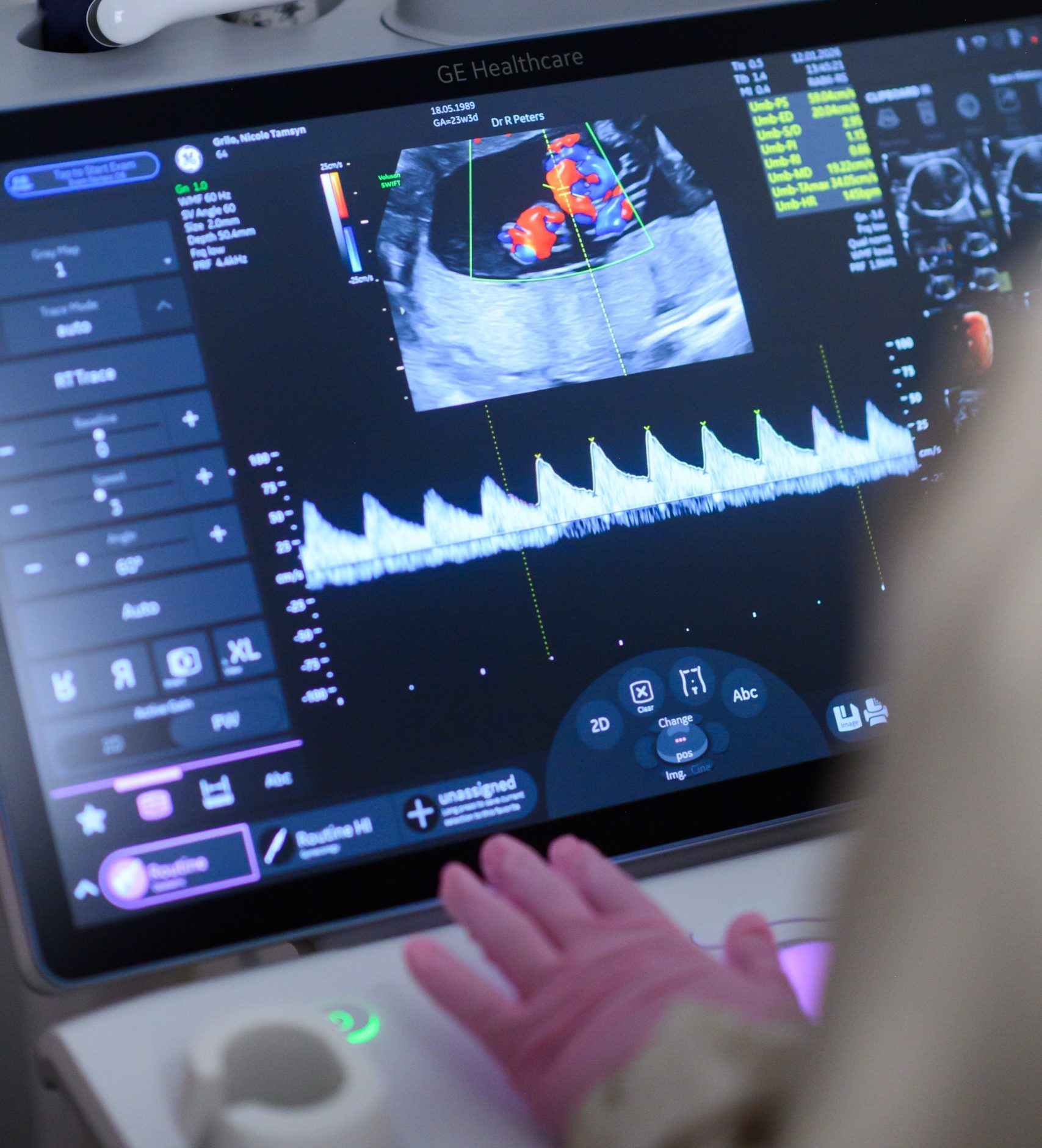
- Pregnancy ultrasounds
Gynaecology Care
- Annual women’s health examinations
- Cervical cancer screening and colposcopy
- Contraception and family planning
- IUCD insertion
- Adolescent gynaecology
- Sexual health counselling
- Abnormal uterine bleeding and menstrual disorders
- Menopause care
- Infertility / subfertility assessment
- Management of common gynaecological conditions
- Minor and major gynaecological surgery
UNDERSTANDING
Gynaecological Procedures
Gynaecological procedures are medical tests or treatments that help diagnose, manage, or treat conditions affecting the female reproductive system. These are usually carried out by specialists such as obstetricians and gynaecologists. They can be recommended for many reasons, including contraception, abnormal Pap smear results, irregular bleeding, or other concerns.
Below are some of the common procedures that Dr Rafeeqah Peters performs to support women’s health:
Colposcopy
Large Loop Excision of the Transformation Zone (LLETZ)
Cone Biopsy
Hysteroscopy
Hysterectomy
Laparoscopy for Ovarian Cysts
Insertion of an intrauterine device (IUD)
Insertion of Implanon
Dr Rafeeqah Peters is committed to providing safe, compassionate, and expert care. Her goal is to ensure that every woman feels supported and well‑informed when it comes to her reproductive health.
UNDERSTANDING
Obstetric Procedures
Obstetric procedures are medical interventions carried out to protect the health of both mother and baby around the time of birth.
Dr Rafeeqah Peters offers the following obstetric services:
Vaginal Deliveries
Vaginal Birth After Caesarean Section (VBAC)
Some women who have had a Caesarean Section may be able to deliver vaginally in their next pregnancy. VBAC is possible if the current pregnancy is healthy and the previous Caesarean Section involved a low transverse incision.
Caesarean Section
A Caesarean Section is recommended when a vaginal birth may not be safe. It can be planned ahead of time or performed during labour if necessary. The procedure involves making an incision in the lower abdomen and uterus to deliver the baby.
- When the baby is too large to pass through the birth canal (cephalopelvic disproportion).
- Certain twin pregnancies.
- Previous Caesarean Section.
- Placenta previa (placenta covering the cervix).
- Baby lying sideways (transverse position).
- Baby in breech position (feet or buttocks first)
External Cephalic Version (ECV)
If the baby is still in the breech position at around 36 weeks, Dr Peters may recommend an ECV. This involves gently applying pressure to the mother’s abdomen to turn the baby so that the head is facing downward, making vaginal delivery more likely.